
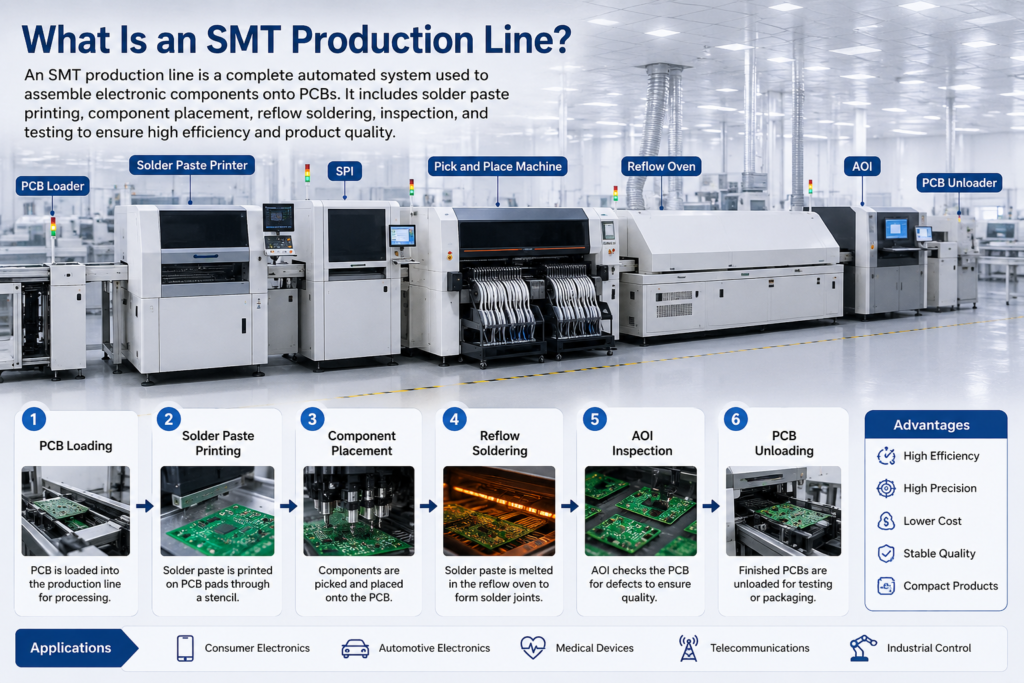
An SMT production line is a modern manufacturing system used to assemble electronic components onto printed circuit boards (PCBs). SMT stands for Surface Mount Technology, a process where electronic components are mounted directly onto the surface of a PCB instead of inserting component leads through holes. Today, SMT technology is widely used in the production of smartphones, computers, automotive electronics, medical devices, communication equipment, and industrial control systems.
A typical SMT production line consists of several automated machines connected by conveyor systems. The process usually begins with a PCB loader, which automatically feeds bare PCBs into the production line. The boards then move to a solder paste printer, where solder paste is applied to specific PCB pads through a stencil. Accurate solder paste printing is very important because it directly affects the soldering quality of the final product.
After printing, the PCB moves to the pick and place machine, which is considered the core machine of the SMT line. This machine automatically picks electronic components from feeders and places them onto the PCB with high speed and precision. Modern SMT machines can place thousands of components per hour. Common SMT equipment manufacturers include Samsung, Panasonic, Yamaha, and Fuji.
Once all components are mounted, the PCB enters the reflow oven. Inside the oven, controlled heat melts the solder paste and permanently connects the components to the PCB. The reflow process includes several stages such as preheating, soaking, reflow, and cooling. A stable temperature profile helps ensure strong solder joints and reliable product quality.
After soldering, the PCB is inspected by an AOI (Automatic Optical Inspection) machine. AOI systems use cameras and software to detect defects such as missing components, incorrect polarity, solder bridges, and component misalignment. This inspection process improves quality control and reduces manufacturing errors. Finally, the completed PCBs are collected by the PCB unloader for packaging or further testing.
SMT production lines offer many advantages compared with traditional through-hole assembly methods. They provide higher production efficiency, lower labor costs, better consistency, and support for smaller electronic products. Because SMT components are compact and lightweight, manufacturers can design thinner and more powerful electronic devices.
Today, SMT production lines are becoming more intelligent with the integration of AI inspection systems, smart factory software, and Industry 4.0 technologies. As the demand for consumer electronics, electric vehicles, and IoT devices continues to grow, SMT manufacturing will remain one of the most important technologies in the global electronics industry.